
Robinhood Rangehood Light Switch Fan Switch RPB3CL6SS, RPB3CL6WH RPB3CL9SS, RPB3CL9WH
08055 Robinhood
$39.50 NZDUnit price /Unavailable-
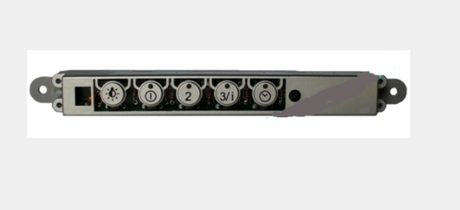
Smeg Rangehood Switch PCB Display Board SHB120LEDSS, SHB90LEDSS, SHIB90LEDS, SHIB120LEDS
04620
$238.00 NZDUnit price /UnavailableIn stock (4 units)

Fisher & Paykel Rangehood Switch Assy With Switch Box 792946
FPH05306
$212.50 NZDUnit price /Unavailable
Fisher & Paykel ELBA Rangehood Microswitch Assembly 792414
FPH05044
$59.75 NZDUnit price /Unavailable
Fisher & Paykel Rangehood Switch TC4/EBM 220 240V W/Box 792963
FPH05319
$91.95 NZDUnit price /Unavailable


Fisher & Paykel Rangehood Switch 3 Speed Bl S/O Robinson R102268BL
FPH22408
$14.50 NZDUnit price /Unavailable

Fisher & Paykel Haier Rangehood Switch Control Assembly
FPH05063
$140.00 NZDUnit price /Unavailable

Fisher & Paykel ELBA Rangehood Slide Microswitch SB600 R102686
FPH22429
$18.75 NZDUnit price /Unavailable
Fisher & Paykel Haier Rangehood Switch Assy Push Button 792516
FPH05097
$97.50 NZDUnit price /Unavailable


Parmco Rangehood Motor Assembly For Range Hood With 4 Button Display Switch Unit
HA64010
$490.00 NZDUnit price /Unavailable
Award Rangehood Switch Assy pps6031 Serial Number Effective Type 2
HA6008K
$95.00 NZDUnit price /Unavailable-
Award Rangehood Switch Assy pps6031 Serial Number Effective Type 1
HA6008N
$65.00 NZDUnit price /Unavailable 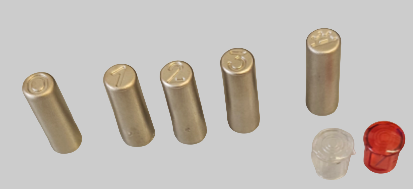
Award Asko Range Hood Rangehood Push Switch Bottons and Lens cs4-90 IS2BP 1S2BP 6FILCOPK00.2
10389B
$29.00 NZDUnit price /UnavailableAward Asko Range Hood Rangehood Push Switch cs4-90 IS2BP 1S2BP 6FILCOPK00.2
10389A
$99.00 NZDUnit price /Unavailable-

Midea Rangehood Function Switch 52T01BK 52T01
08899K
$55.00 NZDUnit price /UnavailableVery low stock (1 unit)



Replacement Rangehood Switches NZ: Buyer's Guide
When your kitchen extractor refuses to change fan speeds or the worktop lights stop responding to the buttons, our selection of replacement rangehood switches NZ wide gives you a reliable, cost-effective way to repair your appliance, with fast delivery across New Zealand. The switch assembly is the mechanical and electrical bridge between you and your rangehood's internal components, routing mains power to either the lamp circuit or the individual speed windings of the extractor motor. Because a rangehood hangs directly over your cooktop, the control assembly is constantly exposed to rising heat, steam, and airborne cooking grease. Over years of daily use, fine oil mist works its way through the gaps around the buttons or slider slot and coats the internal brass contacts, where it thickens into a sticky varnish, attracts household dust, and causes the mechanism to jam, arc, or lose electrical contact altogether.
Replacing a worn or gummy switch assembly is far cheaper than replacing an entire canopy or powerpack unit. Whether your rangehood uses a mechanical push-button bank, a slide switch, or an electronic display switch board, fitting a fresh control unit restores positive clicks across every fan setting and keeps your kitchen properly ventilated.
How to find the right rangehood switch for your appliance
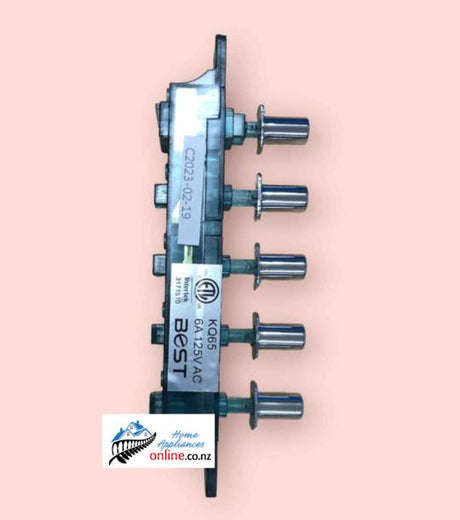
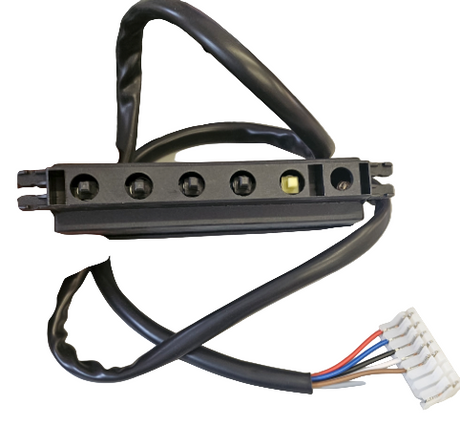
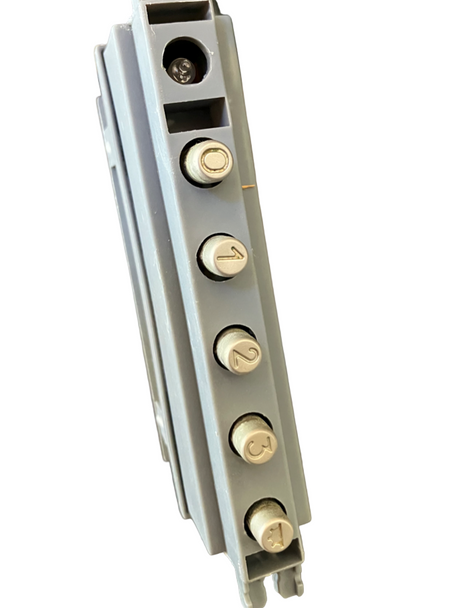
Many rangehood switches look virtually identical from the outside of the fascia—for instance, standard five-button mechanical banks used across multiple canopy and powerpack series—yet they can have different pin layouts, mounting ear positions, or wiring plugs underneath. Ordering by visual appearance alone is one of the most common pitfalls when buying appliance spares. Always verify both your rangehood model number and any markings on the old switch before ordering.
To locate your appliance model number, first switch off the power at the wall, unclip the metal grease filters, and look up inside the main hood cavity. The rating label is usually stuck to the inside side wall of the metal casing or right next to the motor housing. Write down the exact model code—such as Robinhood and Fisher and Paykel codes like RPB3CL6SS, RPA3CI9SS, RWC3CL9WH, HC90CGX1, or Edpowerpack 60—along with any 5-digit product code (like 50022-A or 80700-A) or serial number, as manufacturers sometimes change switch suppliers mid-production (for example, certain Baumatic BKH900GLS and BKH600GLS display switch boards vary by serial number).
Because many rangehood models share common switchgear that may not all be listed on a single page, we also strongly recommend inspecting the back of your faulty switch once it has been safely removed. Look for stamped part codes on the plastic switch body itself—such as KQ35-1, SC706-2BS, MQ165, or AQ165—and check whether the buttons are round or square. On some universal replacement switches, the switch body is an exact mechanical fit while you simply reuse your existing plastic button caps or knobs if the profile differs. Match your model and switch numbers against our product pages, or email our team a clear photo of your old part so we can confirm the right match.
Common rangehood switch types and fault symptoms
Different styles of canopy, slide-out, and integrated powerpack rangehoods use distinct switching mechanisms to control extraction and lighting. Identifying which assembly your unit uses helps you diagnose the fault accurately.
| Switch Type | What It Does | Signs It Needs Replacing |
|---|---|---|
| Mechanical Push-Button Switch Bank | Uses a row of interlocking piano-style or round buttons (typically three fan speeds, an off release button, and an independent latching light button) mounted behind the front fascia. | Buttons stay jammed in the pressed position, refuse to latch when pushed in, require repeated presses to keep the fan running, or pop out on their own mid-use. |
| Slide Switch Assembly | Moves a sliding plastic toggle across a stepped circuit track inside compact, under-cupboard, or telescopic hoods to select off, low, medium, or high fan speeds and toggle the lamps. | The slider feels stiff and sticky from congealed grease, skips over a speed setting without starting the motor, or only makes contact if you hold pressure on the lever. |
| Rocker Switch | Pivots on a central see-saw hinge as an individual two-position on/off switch for worktop lights or a three-position speed selector on classic canopy and powerpack units. | The rocker loses its crisp click and feels loose, sticks on one side, or produces a faint crackling sound and heat discolouration around the plastic bezel. |
| Electronic Display and Touch Switch Board | Combines tactile micro-buttons or capacitive touch pads with an LED or blue LCD display screen behind a glass or stainless fascia, sending low-voltage signals to the main PCB. | Individual speed pads stop responding to firm presses, the LCD readout flickers or loses segments, or the unit beeps and changes speed when rising steam hits the front panel. |
| Slide-Out Carriage Microswitch | A compact lever or plunger switch tucked inside the chassis of a telescopic slide-out rangehood that automatically turns the fan and lights on when you pull the front visor open. | Sliding the front drawer out no longer triggers the fan or lamps even though the speed slider is set, or the extractor keeps running after the visor is pushed fully shut. |
Because electronic and electrical spare parts cannot be returned for a refund or exchange once ordered, it is important to confirm that the switch is the genuine fault before purchasing. If the light button clicks smoothly and firmly into place yet the worktop remains dark, always test a new bulb or inspect our rangehood lights and lamps first. Similarly, if the switch clicks crisply into every speed position and the lights work normally, but the motor merely hums without spinning the blades, the culprit is usually a failed run capacitor or seized motor rather than the switch. Conversely, if a button physically binds, feels mushy, smells burnt, or runs the fan on speeds one and two while speed three is completely dead, the switch contacts are worn out and ready for replacement.
Common causes of failure and how to avoid them
Knowing what wears out a rangehood switch helps you get the longest possible life out of your replacement part:
- Saturated grease filters allowing oil ingress: When aluminium mesh filters become clogged with old cooking oil, rising grease vapour bypasses the filter media and condenses inside the control housing. Over time, that oil turns into a thick, insulating gum across the sliding copper contacts. Washing your metal filters every three to four weeks—or replacing worn rangehood filters—keeps airborne grease out of the switch bank.
- Heavy steam and condensation on the fascia: Waiting until pots are already boiling at full tilt before turning on the extractor allows moisture to roll across the front panel and seep into the button slots, corroding internal springs and terminals. Switch your fan on a minute or two before you start cooking so an upward air current is already established.
- Spraying cleaner straight onto the buttons: Spraying kitchen degreaser or glass cleaner directly onto the control panel flushes liquid and dissolved grime straight into the switch body. Always spray your cleaning product onto a microfibre cloth first and wipe around the buttons gently.
- Forcing stiff or sticking controls: Pushing harder on a button or slider that has started to bind with grease often snaps the internal plastic latching hooks or cracks the mounting ears behind the fascia.
Fitting tips
- Disconnect the appliance from mains power before starting: Always unplug the rangehood from its wall socket or switch off the dedicated circuit breaker at your household switchboard before removing any covers, as mechanical rangehood switches carry live 230-240V mains electricity.
- Remove the grease filters and fragile lamps first: Unclipping the filters gives you clear access to the inner control box screws and prevents tools or screws from dropping through the mesh or breaking glass lamp diffusers.
- Compare the new part against your old switch before installing: Before fitting or connecting any wires, hold the replacement switch beside your original unit to verify that the mounting hole centres, button spacing, and wiring plug or terminal layout match your appliance.
- Take a clear photo of individual wire connections: If your switch uses separate push-on spade terminals rather than a single keyed multi-plug, photograph the exact wire colours and terminal numbers on the old switch body so the motor speed windings are reconnected in the proper sequence.
- Transfer your original knobs or button caps if required: On certain replacement switches where the electrical switch block is identical but the supplied button profile differs from your fascia, carefully unclip and reuse your existing external knobs or button caps so they sit flush with the front panel.
- Clean grease residue from the fascia cutout: While the old switch assembly is removed, wipe the inside and outside edges of the fascia button holes with warm soapy water or isopropyl alcohol so the new buttons move freely without rubbing on old grime.
- Use a licensed electrician or technician for hardwired or damaged circuits: If your rangehood is wired directly into the wall without a plug, or if you open the switch box and find melted wire insulation or burnt connectors, have a registered electrical tradesperson carry out the repair safely.
Related parts
While you have the rangehood isolated and open to replace the switch, check these related categories to complete your repair in one go:
- Rangehood Filters: Replace clogged aluminium mesh grease filters or exhausted charcoal carbon filters so cooking oil and steam do not foul your new switch assembly.
- Rangehood Lights and Lamps: If a blown bulb or damaged lamp assembly was the real reason your worktop lighting failed, browse our halogen bulbs, LED lamps, and diffuser covers.
- Rangehood PCBs: When an electronic rangehood has a intact button pad but still will not power up or switch motor relays, you may need a replacement main printed circuit board.
- Rangehood Fan Motors: If your switch clicks cleanly through every speed setting yet the extractor fan grinds, rattles, or refuses to spin, inspect our replacement fan motors and assemblies.
- Rangehood Capacitors: A faulty motor run capacitor will leave the fan humming without starting even when the speed switch is working properly.
- Rangehood Parts: View our full parent category for transformers, ducting, fan blades, and other spare parts across all major New Zealand kitchen brands.
Frequently asked questions
How do I find the right replacement rangehood switch for my model?
How do I find the right replacement rangehood switch for my model?
Start by switching off the power, unclipping the metal grease filters, and locating the appliance rating sticker inside the rangehood casing to get your exact model number. Because many rangehood models share switch assemblies that may not all be listed on the page, it is also very helpful to check the numbers stamped on the back of your old switch body, such as KQ35-1, MQ165, or AQ165. Match those details against the product description, or email our team your model number and a photo of your old switch so we can confirm the right part before you buy.
How can I tell if my rangehood switch is faulty rather than the fan motor or light?
How can I tell if my rangehood switch is faulty rather than the fan motor or light?
Pay attention to how the buttons physically feel and whether the fault affects a single setting or the whole unit. If a push button refuses to latch in, feels jammed with hardened grease, or runs the fan on speeds one and two while speed three is dead, the switch mechanism is worn out. However, if the buttons click cleanly into every position and the lights work while the motor just hums without spinning, the fault is usually the motor capacitor or fan motor rather than the switch.
What if the replacement switch has different buttons or knobs from my current rangehood?
What if the replacement switch has different buttons or knobs from my current rangehood?
On some replacement switches, such as certain Robinhood and powerpack switch assemblies, the electrical switch block and mounting brackets are an exact fit, but the supplied button cap style may differ slightly from your original unit. In those cases, you can simply pull off and reuse your existing plastic knobs or button caps on the new switch body so the front fascia looks and fits just like the original. Always check the notes and photos on the individual product page to see if button reuse applies to your part.
Can I return an electrical rangehood switch if I order the wrong part?
Can I return an electrical rangehood switch if I order the wrong part?
No, electronic and electrical spare parts cannot be returned for a refund or exchange once purchased, as we cannot verify whether a part has been connected to mains power or damaged during test fitting. Because of this policy, we strongly recommend removing your faulty switch first to compare its shape, wiring plug, and stamped part numbers carefully against our product photos and dimensions. If your model number is not listed or you have any doubt at all, email us at info@homeappliancesonline.co.nz before placing your order and our team will verify compatibility for you.
Can I fit a replacement rangehood switch myself, or do I need a technician?
Can I fit a replacement rangehood switch myself, or do I need a technician?
Many mechanical push-button switch banks come as a complete assembly with a plug-in wiring harness, making them straightforward to swap over if you first unplug the rangehood completely from the wall power socket. However, rangehoods operate on 230-240V mains electricity, so if your appliance is hardwired into the wall, requires transferring individual terminals, or uses an electronic display switch board, we strongly recommend having a licensed electrician or appliance technician install the part safely.